

If you want to get a handle on your small business’s cash flow, it really comes down to three things: getting paid faster, being smart about your spending, and letting technology handle some of the grunt work. Nail these three, and you’ll have the cash you actually need to pay your bills, jump on growth opportunities, and weather any storms that come your way.
Why Cash Flow Is Your Business’s Lifeline

Here’s a hard truth many of us learn as business owners: profit on a spreadsheet doesn’t pay the bills. Cash in the bank does. It’s easy to look at a profitable quarter and feel great, but if your clients are dragging their feet on payments or a surprise expense pops up, that “profit” won’t help you make payroll. Suddenly, you’re scrambling.
This isn’t just some rare worst-case scenario. It’s a huge source of stress for entrepreneurs everywhere. Recent surveys show that about 29% of small business owners say cash flow is one of their biggest worries, right up there with inflation. It’s a universal pain point.
Common Cash Flow Pain Points
For a lot of businesses, the most immediate struggle is that nerve-wracking gap between sending an invoice and actually seeing the money land in your account. That delay can stretch from weeks into months, tying up the very funds you need for day-to-day operations.
If you run a subscription business, you’ve got another layer to this problem: failed payments. They can quietly chip away at your revenue month after month. Getting a handle on these is non-negotiable, and figuring out how to stop failed payments from hurting your SaaS business is a great place to start.
Other familiar headaches include:
- Surprise Expenses: A critical piece of equipment dies. You get an unexpected tax bill. Without a cash buffer, these can instantly put you in the red.
- Seasonal Dips: Most businesses have slower periods they can predict. But if you don’t plan for them, those predictable lulls can cause major financial strain.
- Inventory Mismanagement: This one is a silent killer. Pouring too much cash into products that just sit on a shelf is a surefire way to choke your cash flow.
The real issue is that profit is a long-term game, but cash flow is the oxygen your business needs to breathe today. You can’t pay your team or your landlord with profit—you pay them with cash.
This guide will give you a clear overview of the key strategies to improve cash flow in your small business. We will unpack how to get paid faster, control your spending, and use the right technology to stay ahead of the curve.
To kick things off, this table lays out the three pillars we’ll be exploring. Think of it as your quick-reference guide to the core strategies for building a healthier cash flow.
Core Strategies for Immediate Cash Flow Improvement
| Strategy Area | Key Action | Expected Outcome |
|---|---|---|
| Accelerate Payments | Shorten invoice cycles and offer incentives for early payment. | Reduce the gap between billing and receiving cash, boosting liquidity. |
| Control Spending | Review all expenses, negotiate with suppliers, and avoid unnecessary overhead. | Cut down on cash leaving the business, preserving your reserves. |
| Automate Finances | Use software for invoicing, payment reminders, and expense tracking. | Free up your time and reduce human error, ensuring consistency. |
By focusing on these three areas, you can move from simply reacting to financial challenges to proactively managing the health of your business. Let’s dive into the specifics.
Get Paid Faster with Smarter Invoicing
We’ve all been there. You finish the job, send the bill, and then… you wait. That gap between work completed and cash in the bank is one of the most stressful parts of running a business. Let’s be clear: slow-paying clients don’t just create a headache; they actively suffocate your cash flow.
The trick is to make it incredibly easy—and obvious—for people to pay you. This goes beyond just emailing a PDF and hoping for the best. It’s about building a proactive invoicing strategy that gets you paid on your terms.
Your first move? Stop batching your invoices. Don’t wait until Friday afternoon or the end of the month to bill for work you finished on Monday. Send your invoice immediately. This one small habit does two things: it starts the payment clock ticking sooner and shows your clients you’re serious and professional.
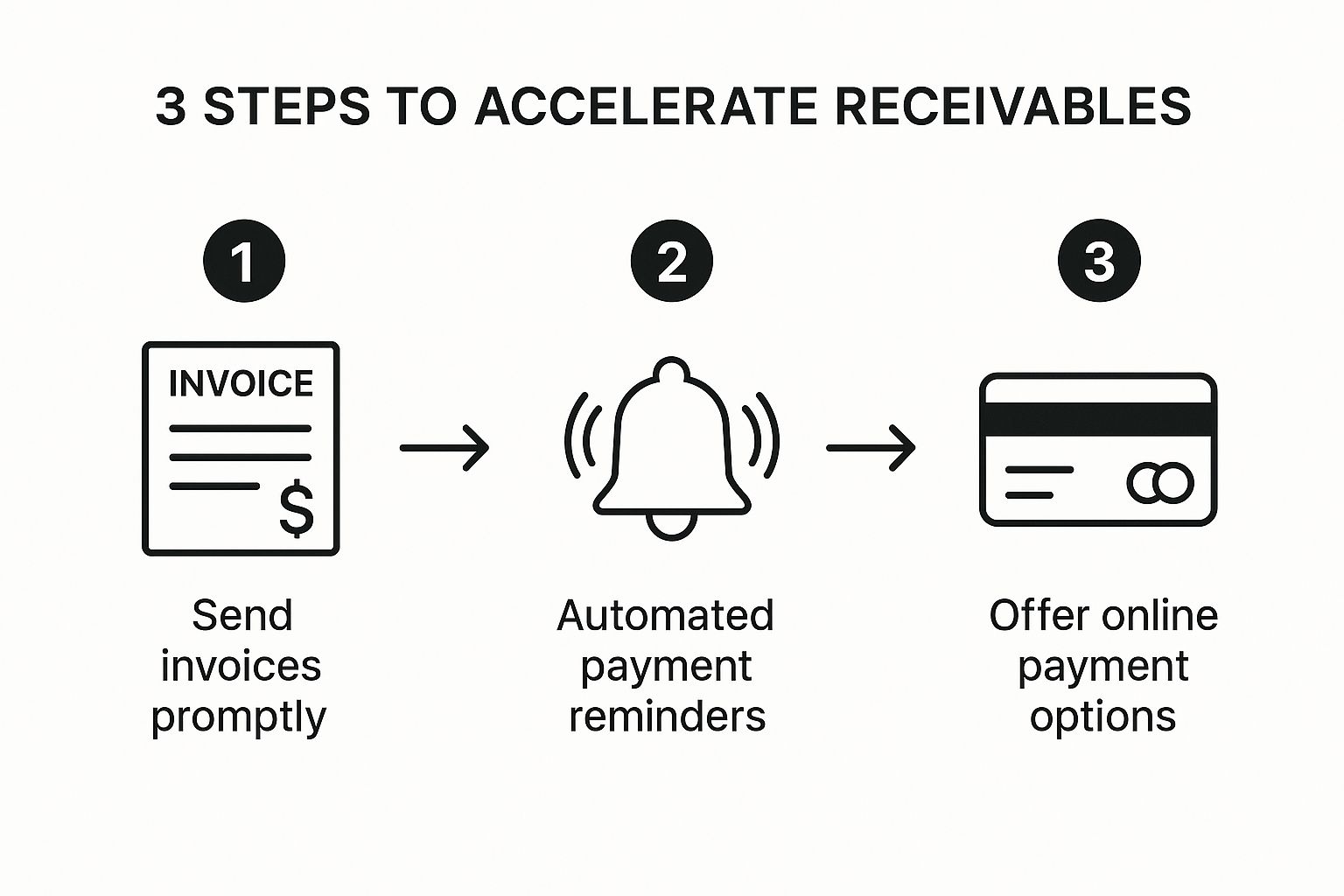
As you can see, a simple system that combines prompt invoicing, automated reminders, and easy payment methods is a game-changer for getting cash into your business.
Make Your Invoices Impossible to Ignore
A clear, professional invoice gets paid much faster than a confusing one. Think about it from your client’s perspective. If they have to hunt for information or ask questions, you’re just giving them a reason to put it off.
Make sure every single invoice is crystal clear and includes these non-negotiables:
- A Unique Invoice Number: This is absolutely essential for tracking and for both you and your client to reference later.
- Clear Due Date: Don’t use vague terms like “Net 30.” Spell it out: “Due by October 25, 2026.” There’s no room for misinterpretation.
- Itemized Services or Products: Break down exactly what they’re paying for. This nips potential disputes and confusion in the bud.
- Multiple Payment Options: Clearly list how they can pay you. If you offer online payments through a platform like Stripe, include direct links.
The fewer hoops a client has to jump through, the faster you’ll get paid. Accepting credit cards, ACH transfers, and even mobile payments removes friction and caters to how people prefer to handle their finances today.
Use Incentives and Follow-Ups Strategically
Even with a perfect invoice, some clients still need a little nudge. This is where a smart combination of incentives and a persistent-but-polite follow-up system makes all the difference.
Have you ever tried offering a small discount for paying early? A simple “2/10, n/30” term, which gives a 2% discount if the invoice is paid within 10 days, can work wonders. That small hit to your margin is often a tiny price to pay for getting cash 20 days sooner and turning future receivables into immediate working capital.
Don’t be shy about following up. I’ve found that most late payments aren’t malicious—the invoice just got buried in a crowded inbox. A polite, automated reminder system can be your best friend, saving you time without souring client relationships.
Set up automated emails to go out a few days before the due date, on the due date itself, and a few days after if it becomes overdue. For those high-value or stubbornly late invoices, a personal phone call is often the most effective tool in your arsenal. It’s a lot harder to ignore a friendly voice on the phone than another email. This mix of automation and personal touch ensures you stay top-of-mind and get paid without alienating the very clients you worked so hard to win.
Control Spending Without Stifling Growth
Bringing more cash in the door is only half the battle. How you manage the money going out is just as critical for a healthy cash flow. This isn’t about pinching pennies so hard you suffocate your business; it’s about being intentional with every dollar you spend.
A great place to start is with a quick expense audit. Seriously, take an hour and just comb through your bank and credit card statements from the last few months. I’m always shocked at what I find when I do this—little “cash leaks” like forgotten software subscriptions or recurring charges for services we stopped using ages ago.
You’d be surprised how fast these add up. A single forgotten $50 per month subscription costs you $600 a year. That’s cash that could be fueling your marketing or paying for a much-needed tool. Cutting just a few of these non-essentials can give you a noticeable boost. And if you’re in a tech-heavy business, there are specific strategies for reducing software development costs that can make an even bigger dent.
Strategically Manage Your Payables
When and how you pay your bills can have a massive effect on your day-to-day cash position. Of course, you need to pay on time to keep your vendors happy. But paying too early can tie up funds you could be using elsewhere.
Take a look at your supplier invoices. Do they offer an early payment discount? Something like 2% off if you pay in 10 days instead of 30? If your cash reserves are looking good, grabbing these discounts is a fantastic way to lower your costs.
However, if cash is tight, don’t be afraid to use the full payment term. A Net 30 term is essentially a 30-day, interest-free loan from your supplier. Using it wisely gives your business breathing room.
If you have a solid, long-term relationship with a vendor, a simple phone call might be all it takes to get better terms. I’ve seen businesses successfully ask to extend their payment window from 30 to 60 days, giving them an entire extra month to hold onto their cash. It never hurts to ask.
Keep Inventory Lean and Efficient
For any business that sells a physical product, inventory is a notorious cash trap. Every single item sitting on your shelf represents money you can’t use for payroll, marketing, or rent. Getting your inventory management dialed in is absolutely essential.
Dive into your sales data. What’s actually moving, and what’s collecting dust? This information is gold because it helps you stop overstocking products that just tie up capital.
Here are a few smart inventory tactics I’ve seen work wonders:
- Identify Slow-Movers: Use your sales reports to spot the products that aren’t selling. Don’t let them sit there! Run a flash sale or create a promotional bundle to liquidate that stock and turn it back into usable cash.
- Embrace JIT (Just-In-Time): Instead of buying in huge bulk orders that drain your bank account, try ordering inventory closer to when you actually need it. This slashes storage costs and minimizes the amount of cash you have tied up in unsold goods.
- Track Your Turnover Rate: This ratio tells you how quickly you sell through and replace your stock. A higher number is generally a good sign—it means your inventory is moving efficiently and your cash isn’t getting stuck on the shelves.
By taking active control of your expenses, payables, and inventory, you gain a new level of precision over your cash outflows. This isn’t about being cheap; it’s about being strategic. It’s about making sure every dollar you spend is working hard for your business.
Leverage Technology to Automate Cash Flow
Let’s be honest, manual financial admin is a slog. Chasing down payments, trying to reconcile expenses, and creating every invoice by hand isn’t just a time-suck—it’s actively slowing down your cash flow.
All that time spent on admin pulls you away from the work that actually grows your business. Even worse, it opens the door to human error and delays in your single most important process: getting paid. The fix? Stop trying to do it all yourself.
Bringing in some simple automation is one of the biggest levers you can pull to improve your cash flow. Modern, easy-to-use software can put your invoicing, payment reminders, and expense tracking on autopilot. It creates a system that works for you in the background, even when you’re focused on something else entirely.
Put Your Invoicing on Autopilot
If you’re going to automate one thing, make it your accounts receivable (AR). This one change can have a massive ripple effect on your company’s financial health.
It’s not just a small tweak. Research shows that businesses using AR automation can accelerate their invoice cycles by up to 60%. That translates directly into getting cash in the door faster and dealing with fewer late payments. Some companies even report saving over $34,000 a year on processing costs alone. You can dig into more details on how automation can boost your cash flow at Clarify Capital.
Here’s where automated invoicing tools really shine:
- Scheduled Invoices: Perfect for retainers or subscriptions. You can set up invoices to automatically generate and send on a recurring schedule. Set it and forget it.
- Automated Follow-Ups: This is a game-changer. The system can send out polite but persistent reminders for payments that are coming due or already late. You don’t have to lift a finger or have another awkward conversation.
- Integrated Payment Links: Your invoices can include a “Pay Now” button, making it ridiculously easy for clients to pay you online in just a few clicks.
Imagine a system that chases late payments for you and gives you a clear, real-time picture of your cash position. This isn’t some far-off tech; it’s available right now and built for businesses just like yours.
Choose the Right Tools for Your Business
The software market can feel overwhelming, but you don’t need a clunky, enterprise-level system. Plenty of tools are designed specifically with small businesses in mind, featuring clean dashboards and straightforward functionality.
When you’re looking at options, focus on software that handles the core tasks well. Platforms like Zoho Invoice, QuickBooks, and FreshBooks are popular for a reason—they bring all these critical jobs into one place.
Take a look at the dashboard below. This is what a good tool can do for you at a glance.
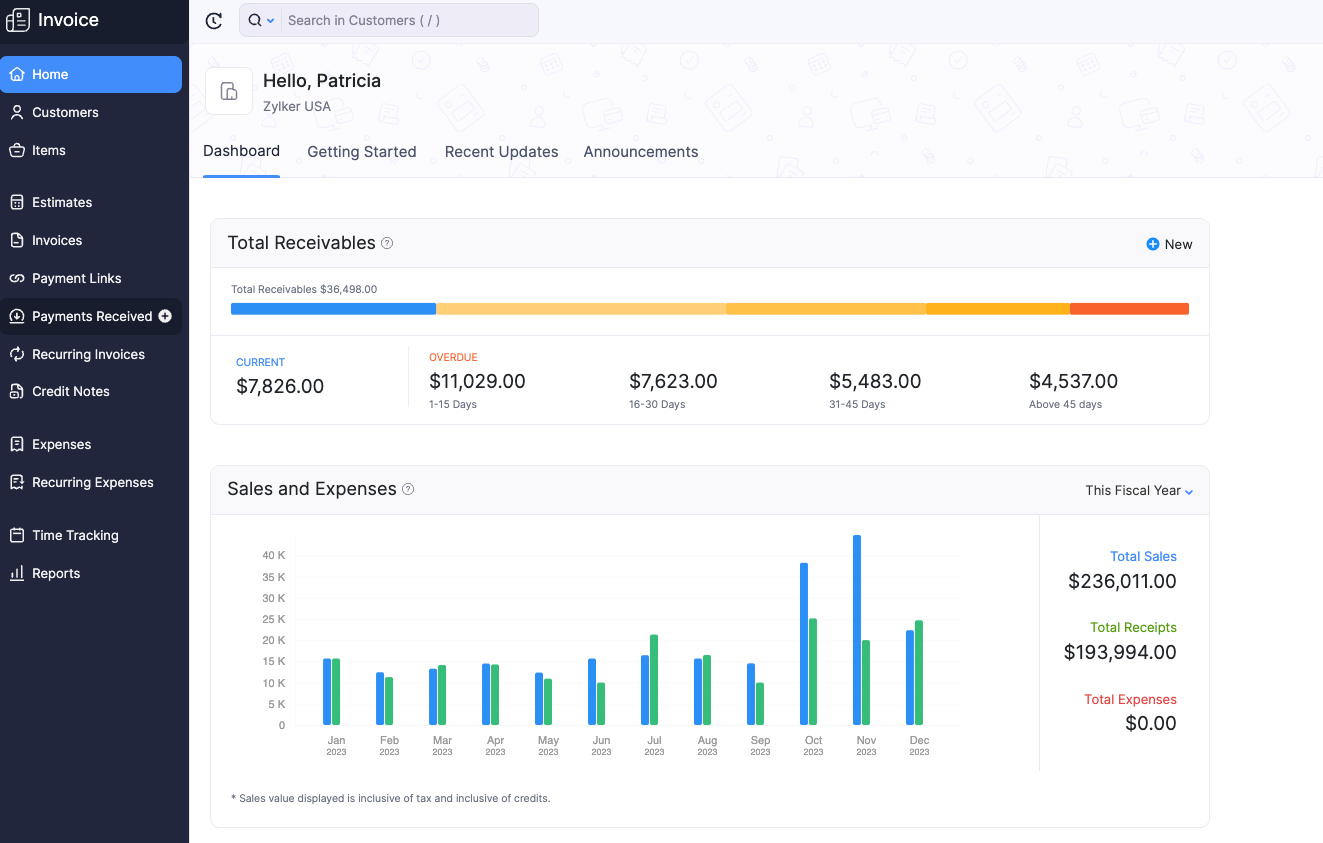
This kind of visual summary instantly flags important numbers, like total receivables and what’s overdue. It lets you spot potential problems before they spiral out of control.
A small investment in the right technology pays for itself almost immediately. You’re not just buying software; you’re buying back countless hours of administrative work and dramatically shortening your cash conversion cycle.
Ultimately, using technology is about building a more resilient and efficient financial operation. When you automate the routine stuff, you free up your mental energy and your capital. That lets you get back to focusing on what really matters: serving your customers and growing your business.
Find the Right Financing to Bridge Cash Gaps

Even with the best-laid plans, sometimes you just need a cash buffer. We’ve all been there—a big client pays late, a seasonal slump hits harder than you projected, or a fantastic growth opportunity lands in your lap that you simply can’t afford to miss.
Getting financing isn’t a sign of trouble; it’s a strategic move to bridge those temporary gaps. The real trick is picking the right tool for the job. Using the wrong one can turn a short-term fix into a long-term headache. When your internal tweaks aren’t enough, understanding your financing options is a critical step to keeping your business healthy.
Flexible Funding for Everyday Needs
One of the most useful tools for any small business owner is a business line of credit. I like to think of it as a financial safety net. It’s a set amount of capital you’re pre-approved for, and you can draw from it whenever you need to cover fluctuating costs like payroll or inventory.
The best part? You only pay interest on what you actually use. This makes it perfect for managing the natural, unpredictable rhythm of business. For example, a construction company could use its line of credit to buy materials for a new project, then pay it back the moment the client’s first payment clears. It’s a flexible, repeatable way to smooth out cash flow without the commitment of a huge, fixed loan.
Choosing the right financing means looking beyond the immediate cash. It’s about finding a solution that supports your business model without adding unnecessary stress. A line of credit provides flexibility, but other options are better suited for different challenges.
Unlocking Cash from Unpaid Invoices
Is your cash trapped in your accounts receivable? If you’re sitting on a pile of unpaid invoices from reliable clients, invoice factoring or invoice financing can turn that paper into cash almost instantly.
Here’s how invoice factoring generally works: a company buys your outstanding invoices from you at a discount. You get a big chunk of the invoice value—often around 85%—upfront. The factoring company then takes on the job of collecting the full payment from your client. Once they’re paid, they send you the rest of the money, minus their fee.
This can be a game-changer, especially for businesses stuck with long payment cycles. Just be aware that the factoring company will be talking to your clients, which is something you’ll want to consider carefully.
- Best for: Businesses with high-value invoices and long payment terms (like 60-90 days).
- Watch out for: The fees can be high, and you’re introducing a third party into your client relationships.
For subscription businesses, managing receivables is an even deeper game, often involving things like automated payment retries. Before you even think about external financing, your first line of defense should be a solid dunning management strategy. To dive deeper, check out our guide on dunning management and how it works. Making sure you collect every dollar you’re already owed is the best cash flow improvement you can make.
Your Cash Flow Questions Answered
Even with the best strategies in place, managing your business’s finances can feel like a moving target. It’s only natural for tough questions to pop up. Let’s walk through some of the most common ones I hear from business owners, breaking them down with straightforward answers to help you get a better handle on your cash flow.
What Is the Difference Between Profit and Cash Flow?
This is a big one, and it trips up a lot of people. Think of it like this: profit is what you’ve earned on paper after you subtract all your expenses from your revenue. It’s a great metric for your business’s overall health over a longer period, like a quarter or a year.
Cash flow, on the other hand, is the actual money moving in and out of your bank account in real-time. You can be wildly profitable but still find yourself in a cash crunch if your clients are taking their sweet time paying invoices. Profit is a long-term report card, but cash flow is the oxygen your business needs to survive day-to-day. You can’t pay your employees or your rent with profit—you need cold, hard cash for that.
How Often Should I Run a Cash Flow Forecast?
For this to be truly useful, you need to be consistent. For most small businesses, the gold standard is a rolling 13-week cash flow forecast that you update every single week. Why 13 weeks? It’s the perfect sweet spot—long enough to see what’s coming down the pipeline but short enough to let you react quickly to potential cash gaps before they become full-blown emergencies.
Of course, for bigger-picture strategic planning, a 12-month forecast reviewed monthly is also a smart move. But if your business is in a high-growth phase or a particularly volatile industry, you might even want to do a quick daily check-in on your cash position just to stay on your toes.
The biggest mistake I see business owners make is just assuming money will show up when it’s supposed to. A regular forecast forces you to replace those dangerous assumptions with actual data, giving you a realistic picture of your financial health.
Can I Really Improve Cash Flow Without Taking on Debt?
Absolutely. In fact, looking inward at your own operations is always the best place to start. Before you even think about loans or lines of credit, focus on the fundamentals you can control. These debt-free strategies build a more resilient and financially solid business from the ground up.
- Speed Up Your Receivables: This is your most powerful lever. Smart invoicing, offering small discounts for early payment, and having a system for following up can drastically shorten the time it takes to get paid.
- Negotiate Better Terms: Get on the phone with your vendors. Can you extend your payment terms from Net 30 to Net 60? Every extra day you hold onto your cash helps.
- Trim the Fat: Do a quick and dirty audit of your expenses. You’d be amazed at the “cash leaks” you can find, like forgotten software subscriptions or services you’re barely using.
What Is the First Thing to Do When Facing a Cash Shortage?
The moment you see a cash shortage on the horizon, the key is to take organized action, not to panic. Your very first move should be to get a crystal-clear, immediate picture of the situation.
Start by making a simple list of all your expected cash inflows and all your mandatory cash outflows for the next 30 days. This creates an honest, no-fluff baseline.
Next, pivot your entire focus to your accounts receivable. This means personally calling every single client with an overdue invoice. For invoices that are current but not yet paid, consider offering a small 2% discount for immediate payment. At the same time, look at your own bills. Are there any non-essential payments you can push back without hurting your key vendor relationships? This two-pronged attack—aggressively pulling cash in while strategically slowing cash out—is the fastest way to get some breathing room.
For subscription businesses, this is also the critical moment to look at your failed payments. A solid system for recovering failed payments is non-negotiable, and understanding what dunning management is can be a total game-changer when cash gets tight.
Are failed payments and customer churn silently draining your revenue? Stunning specializes in recovering lost payments for subscription businesses on Stripe and Subbly. Our automated tools help you recover 20-80% more failed payments, boosting your cash flow and letting you focus on growth. Start your free 15-day trial and see the difference at https://stunning.co.