
Churnkey combines payment recovery with cancellation-focused retention tools. If you only need failed subscription payments recovered, choose around that narrower job and who will run it. The best Churnkey alternative in 2026 is Stunning if you need focused recovery software or managed help; Stripe’s built-in recovery is the starting point if your team will own retries and emails.
- For Churnkey alternatives for payment recovery, shortlist Stunning and Stripe’s built-in retries and emails.
- Choose managed dunning when nobody owns recovery reviews, customer messages, and unresolved accounts.
- Keep Churnkey if you also use its cancellation-focused retention tools.
- Compare paid invoices from the same failed-payment group, not headline recovery claims.
Why this matters
Failed-payment recovery and cancellation prevention solve different problems. A customer whose renewal payment fails has not necessarily decided to leave. Dunning means the retries, reminders, and follow-up used to collect that unpaid payment.
For a subscription software business using Stripe, the purchasing question is practical: do you need different software, or someone responsible for the work? Installing another tool does not assign a recovery owner. Neither does switching on reminders.
This 2026 comparison separates a focused recovery provider from the recovery controls already inside Stripe. It does not rank vendors by unsupported recovery percentages or assume that more features produce more collected revenue.
Churnkey alternatives at a glance
| Option | Best for | Standout distinction | Difference from Churnkey |
|---|---|---|---|
| Stunning | Businesses choosing focused recovery software or managed dunning | Offers failed-payment recovery software and managed services | Centers the buying decision on payment recovery and who runs it |
| Stripe’s built-in recovery | Stripe businesses keeping recovery work in-house | Built-in retries and customer emails | Starts with existing billing controls rather than a separate retention provider |
| Churnkey | Teams addressing failed payments and customer cancellation | Covers payment recovery alongside cancellation-focused retention | Benchmark option when both jobs belong in your requirements |
Choose the operating model before comparing feature lists. A team that wants to hand off recovery has different requirements from a team that wants more controls for its own billing operator.
Do not treat this table as a platform compatibility matrix. Confirm support for your billing setup and selected offering before committing to a change.
1. Stunning: best for focused recovery and managed help
Stunning offers failed-payment recovery software and managed dunning services. Its stated business scope includes Stripe, Foxy, and Subbly subscription businesses; confirm the platform support of the specific offering you select. Do not assume Stunning Software and Managed Recovery have identical implementation requirements.
Best for: Subscription businesses that want payment recovery as the main job, especially when failed payments are accumulating without a clear owner.
Where the focused approach shines
- A relevant scope. Your evaluation can stay on unpaid renewals, customer messages, and collection follow-up rather than cancellation flows you do not need.
- A choice about ownership. Software and a managed service address different staffing situations. Choose software when someone can operate it; consider managed help when that work needs an owner.
- A practical audit discussion. Start with failed invoices and your current process before deciding whether to replace anything.
Where the approach falls short
- Software still needs an operator. Someone must review results, maintain messages, and handle accounts that automation does not resolve.
- Managed recovery still requires internal decisions. You retain responsibility for account-access policy, billing exceptions, and commercial decisions about individual customers.
- Payment recovery is not the whole retention job. If cancellation prevention is also a requirement, assess it separately rather than assuming a recovery purchase covers it.
Head-to-head with Churnkey
| Dimension | Focused recovery provider | Churnkey |
|---|---|---|
| Buying objective | Recover failed subscription payments | Address payment recovery and cancellation-related retention |
| Ownership question | Choose software operation or discuss managed help | Establish who will operate the recovery workflow |
| Evaluation priority | Recovery process, responsibilities, and paid-invoice reporting | Recovery requirements plus any cancellation requirements |
| Reason to choose | You want a payment-recovery-focused engagement | You need both recovery and cancellation tools |
For your 2026 evaluation, ask for separate explanations of the software and managed-service arrangements. Establish who reviews results, who changes messages, and who follows up on unresolved accounts. Get those responsibilities written into the agreed scope.
Verdict: Buy focused recovery help when payment collection is the job; choose the managed route when operating capacity is the constraint.
2. Stripe’s built-in recovery: best for an internal recovery owner
Stripe includes built-in retries and customer emails. These give a Stripe subscription business an existing place to manage failed-payment recovery. Start by understanding that setup before deciding another provider is necessary.
Best for: Teams with a named billing or operations owner who can maintain recovery settings and follow up when automated steps end.
Where Stripe’s built-in recovery shines
- An existing starting point. Review the retries and emails connected to your current billing process before adding another system.
- Direct internal ownership. Your team can keep recovery decisions alongside subscription and invoice administration.
- A useful baseline. Document what the current process collects so a replacement has a clear comparison point.
Where Stripe’s built-in recovery falls short
- Built-in controls are not a managed service. Your business still needs someone to review outcomes and decide what happens next.
- Configuration is not follow-up. Sending a reminder does not resolve every customer’s billing problem.
- Switching fewer tools does not remove the work. Your owner must maintain messages, investigate unresolved invoices, and coordinate customer contact.
Head-to-head with Churnkey
| Dimension | Stripe’s built-in recovery | Churnkey |
|---|---|---|
| Starting point | Controls inside the existing Stripe billing setup | A separate retention provider |
| Scope considered here | Failed-payment retries and emails | Payment recovery alongside cancellation-focused retention |
| Operating responsibility | Assign an internal recovery owner | Confirm responsibilities before implementation |
| Reason to choose | You want to operate the existing recovery process | You need the broader retention scope |
Do not switch simply because another dashboard exists. First identify a specific limitation in your current process: an unresolved customer action, unclear reporting, missing ownership, or a workflow your team cannot maintain.
Verdict: Hold with Stripe’s built-in recovery when an internal owner can run it and your review identifies no reason to replace it.
Why people switch from Churnkey
There is no need to invent a product failure to justify a different purchase. The legitimate reasons to consider alternatives follow from the job you need done.
You only need payment recovery
If your requirement is collecting failed renewals, cancellation tooling is outside that requirement. That does not make broader retention software bad. It means your shortlist can focus on retries, customer communication, payment updates, and unresolved-account handling.
Write down what must improve before you evaluate replacements. A narrower product category is useful only if the selected process addresses that need.
Nobody owns the recovery process
If nobody reviews outcomes or updates messages, replacing one software product with another leaves the ownership problem intact. Ask whether your business needs a service engagement rather than another implementation project.
This is the central distinction between software and managed dunning. Software supplies capabilities. A managed engagement needs an explicit agreement about who performs the ongoing work.
You want to assess the current process first
A recovery audit is the right next step when you cannot explain what happens after a payment fails. Use the Stripe failed-payments recovery audit checklist to organize the questions.
Bring failed invoices, retry settings, customer messages, and unresolved-account examples. The objective is to locate the work that needs fixing, not to assume a replacement will fix everything.
How to choose without another software project
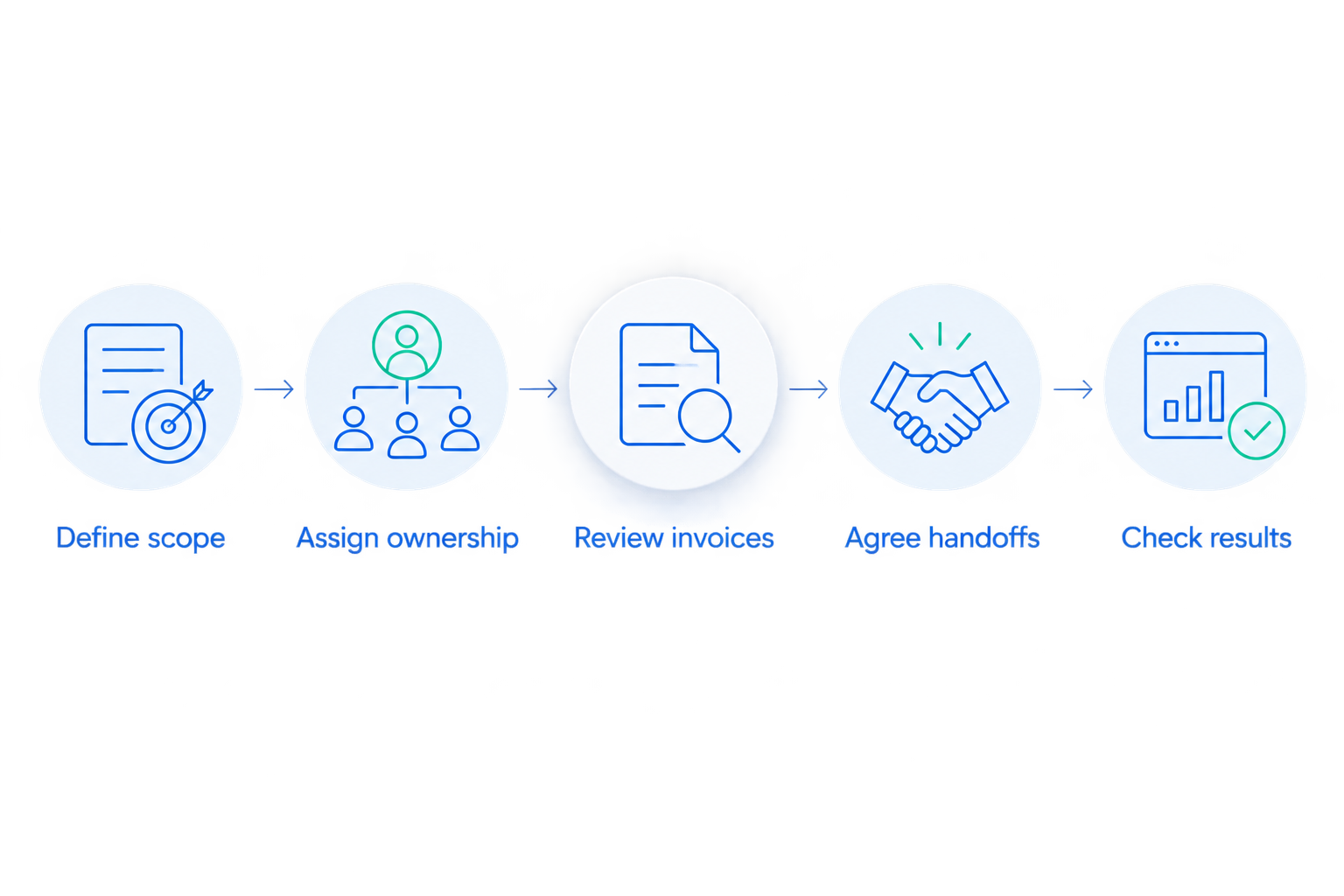
Use this sequence for a 2026 buying decision. Keep the discussion tied to actual invoices and assigned work.
Define scope
State whether you need payment recovery only or cancellation prevention too. Separate failed renewals from customers who actively choose to cancel. Otherwise, a broader feature list can distract from the collection problem.
Assign ownership
Name the person accountable for recovery. If you cannot allocate that responsibility internally, make managed service scope a selection criterion rather than an afterthought.
Review invoices
Use a 30-day invoice cohort as a starting sample: a group of invoices that first failed during the same period. Keep that group intact when comparing outcomes. Do not compare one provider’s newly failed invoices with another provider’s older unresolved accounts.
Agree handoffs
Define what happens when a retry does not collect payment or a customer needs help. Specify who contacts the customer, who handles billing exceptions, and who decides whether account access changes.
Check results
Schedule a 30-minute review with the recovery owner. Review collected payments, unpaid invoices, customer replies, and the next action for unresolved cases. Use the meeting to make decisions, not just read a dashboard.
For managed help, ask Stunning to explain the boundary between its responsibilities and yours. Request the fee structure, implementation responsibilities, review cadence, message maintenance, and escalation process in writing. A useful proposal makes the work understandable before you sign.
Discuss your recovery process
Ask about a paid recovery audit and whether Managed Recovery fits your team’s workload.
What to check before switching in 2026
A migration should preserve a clear account of what happened to each invoice. Do not judge the change by the number of reminders sent.
- Map active automation. List the current retries, customer messages, and manual follow-up tasks.
- Set a cutover boundary. Decide which system handles existing failed invoices and which handles failures after the change.
- Check customer contact. Prevent overlapping reminders from the old and new processes.
- Confirm actual collection. A new card or a customer reply is not the same as a paid invoice.
- Review unresolved work. Check again after 7 days to confirm that open cases have an owner and a next action.
Treat those periods as planning recommendations, not recovery benchmarks. Your billing cycle and customer response patterns determine the final review schedule.
For a 2026 comparison, use the same definition of recovered revenue across every option. Record which invoices were paid, which remain unpaid, and which left the process for another reason. Without consistent definitions, the comparison does not answer the buying question.
When staying with Churnkey is the right call
Keep Churnkey when you need its broader retention scope and your payment-recovery process has a clear owner. A payment-recovery-only shortlist is not a reason to discard cancellation tools your team actually uses.
Before switching, identify the problem that a replacement must solve. If the problem is unclear responsibility, assign responsibility first. If you need managed work, assess that service requirement explicitly instead of assuming a different software interface will supply it.
FAQ
What are the best Churnkey alternatives for payment recovery only?
Stunning and Stripe’s built-in recovery are the focused shortlist here. Choose between a recovery provider and your existing billing controls based on the work required and who will own it.
Should I use Stripe’s built-in retries before buying another tool?
Review Stripe’s existing retries and customer emails before replacing them. Document unresolved invoices and the work your team cannot maintain, then evaluate alternatives against those specific needs.
When should I hire someone to manage failed-payment recovery?
Consider managed recovery when failed payments are accumulating and nobody owns the ongoing work. Agree who reviews results, maintains messages, follows up, and escalates exceptions before signing.
Is Stunning Software the same as Managed Recovery?
No. Software and managed services represent different ways to run recovery. Confirm the platform support, implementation requirements, and division of responsibilities for the specific offering you select.
Do I need cancellation tools to recover failed subscription payments?
No. Failed-payment recovery addresses unpaid transactions, while cancellation prevention addresses customers choosing to leave. Include both in your purchase only when both are requirements.
How should I compare payment recovery results?
Compare the same group of failed invoices using the same outcome definitions. Confirm actual payment rather than treating a card update, reminder, or customer reply as recovered revenue.
When should I keep Churnkey instead of switching?
Keep Churnkey when you need payment recovery and cancellation-focused retention together and the process meets your requirements. Define a specific reason to change before starting a migration.
One last thing
A card update is a step, not a collection result. Before declaring a recovery successful, confirm that the relevant invoice was paid. Make that check part of both your audit and your ongoing reporting.
Related guides
- Dunning software or managed recovery: who owns the work?
- Stripe dunning: when built-in recovery is enough
- A dunning migration plan without overlap