
Churnkey combines cancellation experiences with payment recovery, which suits teams working on both reasons subscriptions end. If your immediate problem is failed Stripe payments with nobody responsible for the follow-up, compare recovery ownership before comparing retention features. The best Churnkey alternative in 2026 is Stunning if you need managed failed-payment recovery; Stripe’s built-in recovery is the first option to assess if your team will own the work.
- For Churnkey alternatives focused on failed-payment recovery, shortlist Stunning when you need someone to run the work.
- Assess Stripe’s built-in retries and emails before adding another recovery system.
- Choose managed dunning when nobody reviews results, updates messages, or follows up with unresolved accounts.
- Keep Churnkey if its cancellation and recovery workflows fit your needs and have a clear internal owner.
Why this matters
Dunning means following up after a payment fails so the customer can complete payment. It includes retries, customer messages, payment-method updates, and decisions about unresolved subscriptions.
That is different from persuading a customer not to cancel. Both affect subscription revenue, but they need different workflows and different measures of success.
For a Stripe subscription business, the useful question is not simply which product replaces Churnkey. It is whether you need different recovery software, someone to operate recovery, or both.
Churnkey alternatives at a glance
This 2026 comparison separates software from service ownership. The options are not interchangeable: a managed service and a self-managed tool put responsibility in different places.
| Option | Best for | Standout distinction | Difference from Churnkey |
|---|---|---|---|
| Churnkey | Teams evaluating cancellation and payment recovery together | Combines cancellation experiences with payment recovery | The benchmark when you need both workflows |
| Stunning Managed Recovery | Subscription businesses that want failed-payment recovery run for them | Managed dunning rather than software installation alone | Focuses this decision on who operates failed-payment recovery |
| Stunning Software | Teams that want dedicated recovery software and retain internal ownership | Failed-payment recovery software | A recovery-focused option rather than a reason to replace every retention workflow |
| Stripe built-in recovery | Teams that want to assess their existing billing setup first | Retries and customer emails within Stripe | Starts with billing-native recovery rather than another retention product |
Treat the table as a shortlist, not a feature-equivalence claim. Check each option against your actual billing setup, customer messages, unresolved invoices, and operating responsibilities.
1. Stunning Managed Recovery: best for unowned recovery
Managed Recovery fits a specific problem: failed subscription payments keep accumulating, but nobody consistently runs the recovery process. You need responsibility for the work, not just another dashboard.
Stunning offers failed-payment recovery software and managed dunning services. Its managed approach includes reviewing results monthly, keeping customer emails current, and following up personally. Define the exact scope for your Stripe business before handing over the work.
Where Managed Recovery shines
- Operational ownership: The decision centers on who reviews results and acts on unresolved payments.
- Ongoing attention: Monthly reviews and message maintenance are part of the stated approach, not just initial setup.
- A focused brief: You can evaluate failed-payment recovery separately from cancellation-page requirements.
Where Managed Recovery falls short
- It is not a substitute for cancellation management. This recommendation addresses unpaid renewals, not every reason customers leave.
- A handoff still needs boundaries. Your team must agree on customer-contact rules, escalation responsibilities, and account-access decisions.
- It does not remove internal accountability. Someone inside your business still needs authority to approve changes and handle exceptions.
Managed Recovery versus Churnkey
| Dimension | Managed Recovery | Churnkey |
|---|---|---|
| Main decision | Whether to hand over failed-payment recovery work | Whether the product fits your retention workflows |
| Evaluation focus | Review cadence, message upkeep, personal follow-up | Cancellation and recovery requirements |
| Responsibility to establish | Provider duties and internal escalation owner | Who operates and reviews your configured workflows |
Best for: A subscription business where failed payments need regular attention and no internal owner has the capacity to provide it.
Verdict: Buy managed help when ongoing ownership is the missing requirement. Confirm the service scope before committing.
2. Stunning Software: best for an internal recovery owner
Stunning Software is the self-managed route in this comparison. Choose software when your team wants to retain responsibility for reviewing failed payments, maintaining messages, and resolving exceptions.
The brand serves subscription businesses using Stripe, Foxy, and Subbly. Do not assume that software support and managed-service scope are identical; confirm the requirements for the specific offering you are considering.
Where the software route shines
- Internal control: Your team keeps responsibility for recovery decisions and customer communication.
- A defined operating role: A billing, finance, or customer-success owner can run recovery as recurring work.
- A focused evaluation: You can assess failed-payment recovery without treating every cancellation requirement as part of the purchase.
Where the software route falls short
- Someone still does the work. Software does not assign an accountable person inside your company.
- Installation is not completion. Messages, unresolved invoices, and reporting still need review.
- It is not a complete retention brief. If your main requirement concerns cancellation experiences, evaluate that separately.
Best for: A Stripe subscription team with an available owner who wants to operate failed-payment recovery internally.
Verdict: Buy software only when you can name its operator. Otherwise, evaluate managed help first.
3. Stripe built-in recovery: best for assessing your baseline
Stripe’s built-in retries and customer emails are the starting point for a Stripe subscription business. Inspect what is already configured before introducing a replacement or an additional system.
The practical advantage is the billing context: you can examine recovery alongside the invoices and subscriptions your team already manages. The limitation is ownership. Existing billing features do not decide who investigates an unresolved renewal.
Where Stripe shines
- A clear baseline: You can document current retry and email settings before comparing alternatives.
- Fewer handoffs to evaluate: Start by understanding the billing workflow already in use.
Where Stripe falls short
- Built-in does not mean managed. Your team still needs to review results and unresolved accounts.
- Configuration needs inspection. Do not assume your current settings match your intended customer experience.
Stripe versus Churnkey
| Dimension | Stripe built-in recovery | Churnkey |
|---|---|---|
| Starting point | Existing billing and recovery configuration | A separate retention product |
| Evaluation focus | Retries, emails, invoice outcomes | Cancellation and payment-recovery workflows |
| Ownership question | Who maintains the billing recovery process? | Who maintains the retention workflows? |
Best for: A team that has not yet established what its existing Stripe recovery setup does.
Verdict: Hold a new purchase until you understand the baseline. Add software or services against a defined gap.
Why people switch from Churnkey
A switch needs a documented requirement, not a general claim that another tool is better. For this 2026 shortlist, use these decision triggers rather than assuming anything is wrong with Churnkey.
You need an operator, not another configuration
Your problem is operational when nobody reviews results, refreshes messages, or follows up with unresolved customers. Changing software without assigning that work leaves the same responsibility gap.
Choose a managed-service evaluation when you want to hand over recurring recovery tasks. Choose software when an internal owner is ready to perform them.
Your brief is failed payments, not cancellation
A customer who wants to cancel and a customer whose renewal payment failed need different responses. Define the problem before buying a broader retention product.
If failed payments are the immediate priority, compare how each option handles that workflow. Keep cancellation requirements in a separate checklist so a useful feature does not distract from the work you need done.
You need a clearer handoff
An unpaid invoice can require action from billing, support, or the customer. Your recovery process needs a rule for deciding who acts next.
Ask every provider to explain where automated activity ends and human follow-up begins. This is a selection criterion, not evidence that any named competitor lacks a handoff process.
How to evaluate a replacement in 2026
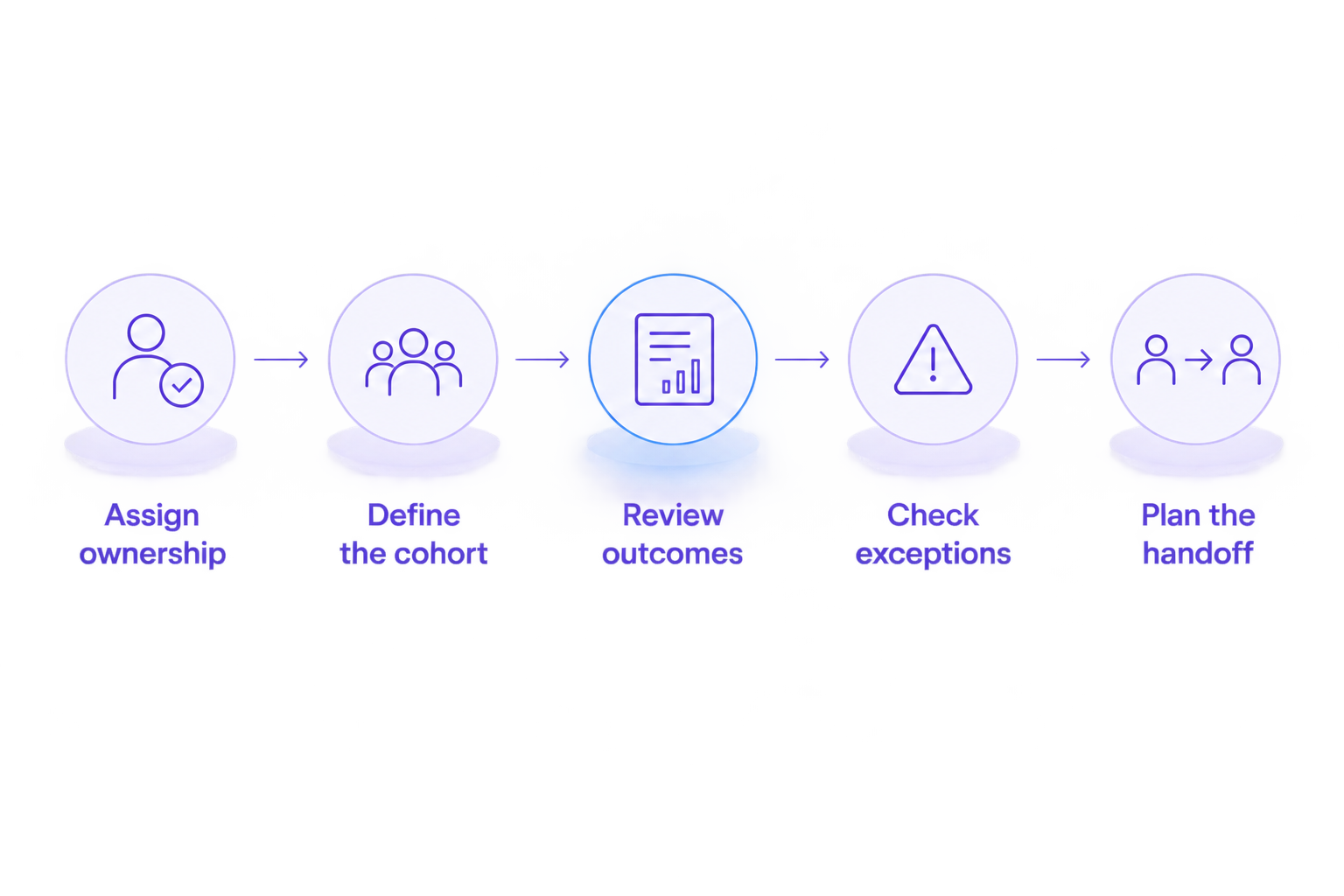
Use a written review plan before changing live recovery workflows. The following sequence keeps the comparison tied to actual invoices and assigned responsibilities.
- Assign ownership. Name 1 recovery owner inside your business, including when you hire a managed service.
- Define the cohort. Select invoices whose first failed renewal falls within a 30-day window.
- Review outcomes. Follow that group through a defined 60-day observation window and record paid, unpaid, and canceled outcomes separately.
- Check exceptions. Inspect cases involving another payment method, customer authentication, or an unresolved billing question.
- Plan the handoff. Decide which system sends each message and who handles cases that remain open.
The 30-day cohort and 60-day observation window are a suggested evaluation design, not an industry benchmark or a promised recovery timeline. Use the same definitions for every option you compare.
A fair comparison also needs consistent accounting. Do not count a payment-method update as recovered revenue; confirm that the relevant invoice was paid. Keep successful payment, subscription status, and customer intent as separate observations.
Ask these questions before approving a replacement:
- Who reviews results, and how often?
- Who changes customer messages after that review?
- Who follows up when automated activity does not resolve the invoice?
- Who approves changes to subscription cancellation or account access?
- How will the team prevent duplicate reminders during the switch?
If those questions expose an ownership gap, discuss a recovery audit before selecting another tool. You can contact the team about your Stripe recovery process and whether software or managed help fits the work.
Discuss your recovery audit
Ask about a paid recovery audit and whether Managed Recovery fits your Stripe subscription business.
When staying with Churnkey is the right call
Keep Churnkey when its cancellation and payment-recovery workflows meet your requirements and somebody actively owns the results. A different product is not a requirement merely because alternatives exist.
Before switching in 2026, identify the exact gap you expect the replacement to close. If you cannot name it, first review your current setup, messages, reporting definitions, and follow-up responsibilities.
A clear diagnosis can point to a configuration change or an ownership change rather than a migration. Do not create a migration project to avoid making an operating decision.
FAQ
What’s the best Churnkey alternative for a Stripe business?
Stunning is the strongest fit in this shortlist when your priority is managed failed-payment recovery. Start with Stripe’s built-in recovery when your team will run the process and has not yet assessed its existing setup.
Should I choose recovery software or a managed service?
Choose software when an internal owner can review results, maintain messages, and handle unresolved payments. Choose a managed service when you need those recurring responsibilities assigned outside your team, with clear internal escalation rules.
Is Stripe’s built-in recovery enough?
Keep Stripe’s built-in recovery when it meets your documented requirements and your team owns the follow-up. Review retries, customer emails, unresolved invoices, and reporting before deciding that another system is necessary.
Can failed-payment recovery replace cancellation management?
No. Failed-payment recovery addresses unpaid renewals, while cancellation management addresses customers choosing to leave. Evaluate both workflows separately when your business needs both.
How should I compare recovery results?
Compare the same invoice definitions over the same observation period. Confirm successful invoice payment, separate unpaid and canceled outcomes, and do not treat a card update alone as recovered revenue.
What should I check before switching from Churnkey?
Document the requirement your current setup does not meet, then assign ownership for the replacement workflow. Also establish which system sends customer messages and how unresolved accounts move to a person.
What matters most when choosing Churnkey alternatives in 2026?
Match the purchase to the work you need done: cancellation management, failed-payment recovery software, or managed recovery. Then verify operating responsibilities and current product scope before signing.
One last thing
Ask a prospective provider to walk through an unresolved invoice, not just a successful recovery. Who notices it, who contacts the customer, and who decides what happens next?
That walkthrough tests the operating arrangement you are buying. Choose the option with a clear next action and a named owner, not just a completed setup.
Related guides
- Dunning software or managed recovery: who owns the work?
- Stripe failed payments: a recovery audit checklist
- Dunning management software: a migration plan without overlap